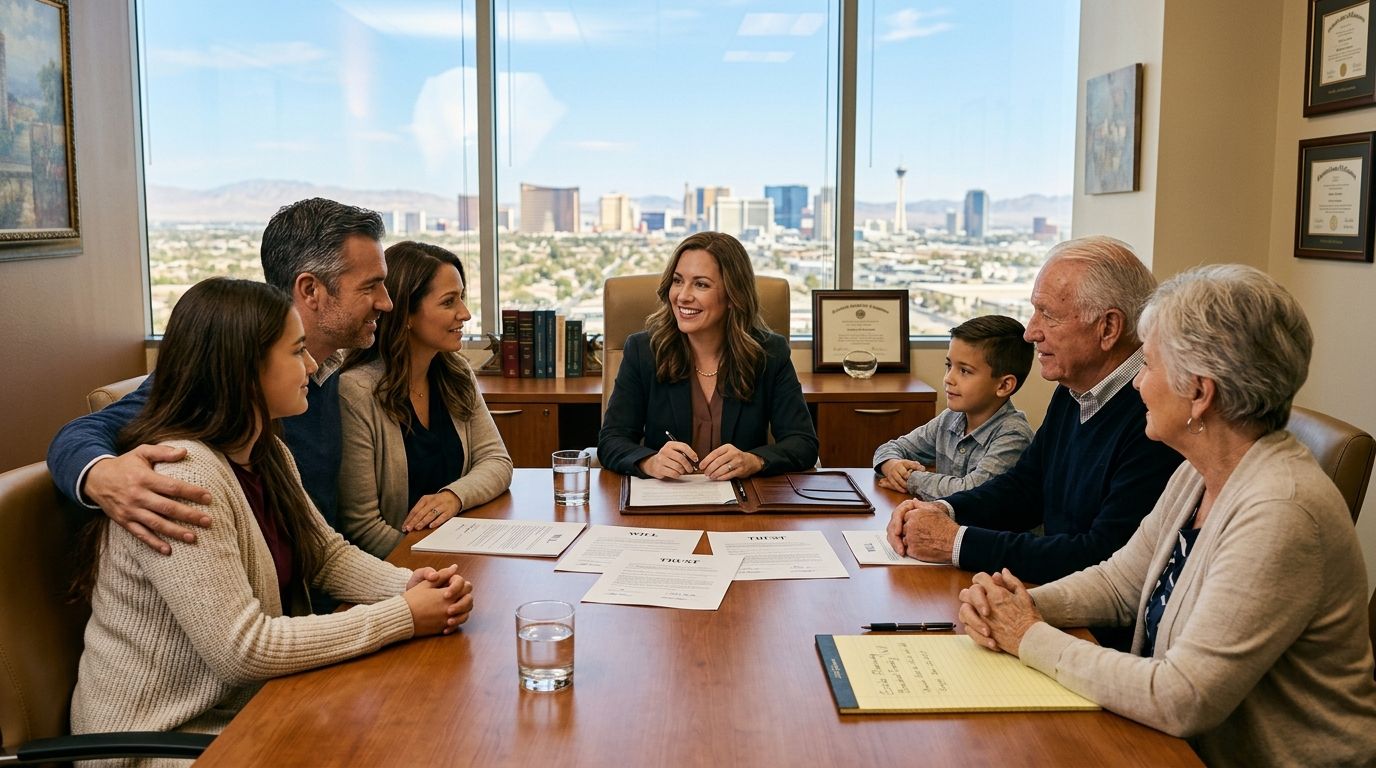
Nevada doesn't automatically protect stepchildren, and it doesn't automatically protect a second spouse either — without the right paperwork, one side of a blended family usually loses. This guide ranks the estate planning documents for blended families in Nevada that actually close that gap, from revocable trusts to a five-minute beneficiary form most people forget to update.
- Revocable Living Trust is the best overall estate planning document for blended families in Nevada in 2026 — it names stepchildren and biological children separately.
- A Last Will alone leaves gaps; Nevada's intestacy rules can cut stepchildren out entirely if you die without one.
- Transfer-on-Death Deed is the fastest fix for a house one spouse owned before the remarriage.
- Durable Financial and Healthcare Powers of Attorney need to be done as a pair, not one or the other.
- Old 401(k) and life insurance beneficiary forms override the will — check them before anything else.
Why this matters
Nevada is a community property state, which sorts assets into "his," "hers," and "ours" the moment you remarry — and that sorting decides who inherits what if a document doesn't say otherwise. A will that just says "to my children" or "to my spouse" doesn't specify which children or which property, and that ambiguity is exactly what gets litigated after a death in a blended family.
The living trust guide for Nevada families breaks down how trusts avoid probate for exactly this kind of split-family situation, and it's the starting point for most of the picks below. Every document on this list can be prepared without a courthouse visit, but none of them work as legal advice on which one fits your situation — that call still belongs to an attorney when the estate is contested or the family dynamics are complicated.
What makes the best estate planning document for a blended family
- Names exact people, not vague categories like "my children" or "my spouse"
- Separates marital property from separate property under Nevada's community property rules
- Doesn't rely on the surviving spouse to voluntarily provide for stepchildren later
- Covers incapacity, not just death — a will does nothing while you're alive but unable to decide
- Enforceable without a court fight the moment it's signed and notarized
- Easy to update when a life event happens — remarriage, a new stepchild, a death, a divorce
Estate planning documents for blended families in Nevada, at a glance
| Document | Best for | Standout feature | Key limitation |
|---|---|---|---|
| Revocable Living Trust | Avoiding probate disputes between spouse and kids | Names beneficiaries by asset, not by relationship | Only controls what's actually retitled into it |
| Transfer-on-Death Deed | A house owned before the remarriage | Real estate passes directly, no probate | Covers only the property named on the deed |
| Durable Financial POA | Incapacity planning while remarried | Names who manages money if you can't | Void at death; doesn't replace a will or trust |
| Healthcare POA / Advance Directive | Making sure the right person decides on care | States medical wishes in writing | Doesn't touch finances or property |
| Last Will and Testament | The minimum legal floor for a small estate | Names guardians for minor children | Goes through Nevada probate |
| Beneficiary designation updates | Retirees consolidating accounts after remarriage | Overrides the will automatically | Doesn't cover real estate or personal property |
Best overall: Revocable Living Trust. Best for keeping a house in the family: Transfer-on-Death Deed. Best for incapacity protection: Durable Financial Power of Attorney paired with a Healthcare POA. Best budget floor: a Last Will and Testament with explicit blended-family language. Best for retirees: updated beneficiary designations.
1. Revocable Living Trust: best overall estate planning document for blended families
A revocable living trust holds your assets — the house, accounts, sometimes a business — and spells out who gets what, by name, when you die. In a blended family, that specificity is the whole point: you can leave the house to your spouse for life and then to your biological children, or split accounts by family line, instead of everything defaulting to "my spouse" and hoping it gets passed down correctly later.
Revocable Living Trust pros:
- Keeps assets out of Nevada probate court entirely
- Names stepchildren and biological children as separate beneficiaries
- Doesn't depend on a surviving spouse to voluntarily provide for the other side of the family
- Can be amended any time your family situation changes
Revocable Living Trust cons:
- Takes more upfront work than a will
- Does nothing if the accounts and house aren't actually retitled into it
- Still needs a backup pour-over will
Best for: blended families with a house, retirement accounts, or any real estate to protect. Verdict: Buy.
2. Transfer-on-Death Deed: best for a house owned before the remarriage
A Transfer-on-Death Deed names who inherits a specific piece of Nevada real estate the moment you die, bypassing probate for that one asset. It's the fast, narrow fix for the most common blended-family flashpoint: the house one spouse brought into the marriage.
Transfer-on-Death Deed pros:
- Real estate passes directly to the named person, no probate
- Revocable any time while you're alive
- Simpler to prepare than a full trust
Transfer-on-Death Deed cons:
- Only covers the property actually named on the deed
- Doesn't touch bank accounts or personal belongings
- Can create friction if the surviving spouse expected to keep living in the home
Best for: anyone who owns a Nevada property alone, from before the current marriage. Verdict: Buy.
3. Durable Financial Power of Attorney: best for incapacity while remarried
A durable financial POA names who can pay your bills, access your accounts, and manage your property if you're incapacitated and can't do it yourself. In a blended family, this decision matters more than most people realize — it decides whether a stepparent or an adult child from a prior marriage controls the money.
The power of attorney guide for Nevada families covers how these documents get drafted and notarized without a court petition.
Financial POA pros:
- Names exactly who manages your finances if you can't
- Prevents a court-appointed guardian process
- Can be broad or limited depending on how much trust you want to extend
Financial POA cons:
- Gives real control to whoever you name — choose carefully in a blended household
- Becomes void at death; a will or trust is still required
- Some banks are slow to honor older POA forms
Best for: anyone remarried who wants someone specific, not a court, managing their money during incapacity. Verdict: Buy.
4. Healthcare Power of Attorney / Advance Directive: best for medical decision clarity
This document names who decides on your medical care if you can't speak for yourself, and states your treatment wishes in writing. Without one, Nevada hospitals default to a next-of-kin order that may put a stepparent and adult children in direct conflict at the worst possible moment.
Healthcare POA pros:
- Names one clear medical decision-maker
- States end-of-life wishes in writing, reducing family conflict
- Prevents hospitals from guessing at next-of-kin priority
Healthcare POA cons:
- Needs to be on file with hospitals in advance to be useful
- Doesn't cover financial decisions
- Needs updating if the named agent moves or the relationship changes
Best for: pairing with the financial POA — never as a substitute for it. Verdict: Buy.
5. Last Will and Testament: best budget floor for a small estate
A properly witnessed will names guardians for minor children and directs who gets what — but in Nevada it still goes through probate, and vague language like "my children" is exactly what gets fought over when there are step and biological kids in the mix.
Last Will pros:
- Cheaper and simpler than a trust
- Names guardians for minor children
- Works as a backup even alongside a trust
- Beats dying intestate, where Nevada's default distribution can leave stepchildren nothing
Last Will cons:
- Still goes through Nevada probate
- Vague relationship language creates disputes in blended families
- Doesn't help at all during incapacity
Best for: a minimum legal step for smaller estates, or as a backup to a trust. Verdict: Hold — fine as a floor, not enough on its own once there's a house or retirement account involved.
6. Beneficiary designation updates: best for retirees consolidating accounts
Retirement accounts, life insurance policies, and payable-on-death bank accounts pass to whoever is named on the beneficiary form — regardless of what the will or trust says. This is the single most overlooked document on this list, and updating it costs nothing but paperwork.
The estate planning package guide for Nevada retirees walks through which accounts need a fresh look after a remarriage.
Beneficiary update pros:
- Overrides the will or trust automatically
- Fastest document on this list to change
- Acts as a safety net even with a full trust in place
Beneficiary update cons:
- Old forms often still name an ex-spouse by accident
- Doesn't cover real estate
- Needs to be checked every few years, not just once
Best for: retirees who remarried and haven't touched their 401(k) or life insurance paperwork since. Verdict: Buy — check this one today.
How this list was ranked
Each document was scored against the criteria above: does it name exact people instead of relationship categories, does it separate marital from separate property under Nevada law, does it cover incapacity as well as death, and can it be updated fast when the family changes. Documents that only handle one of those got marked down even when they're still worth having.
Start your Nevada estate documents
Trusts, wills, and POAs prepared and notarized in Las Vegas, Henderson, and Summerlin.
Which estate planning document should a blended family in Nevada choose?
For most blended families with a house or retirement account, the revocable living trust plus a Transfer-on-Death Deed on the house is the combination that does the most work. Layer both powers of attorney on top for incapacity, keep a will as backup, and check beneficiary forms every couple of years. Skipping the trust and relying on a will alone is the choice most likely to end up in a Nevada probate courtroom in 2026.
FAQ
What's the best estate planning document for blended families in Nevada?
A revocable living trust is the best overall document for blended families in Nevada because it names stepchildren and biological children as separate beneficiaries by asset, not by relationship. It also avoids probate, which is where most blended-family disputes end up.
Is a will enough if you have stepchildren in Nevada?
A will alone is usually not enough once there's a house or retirement account involved. It still goes through probate, and vague language like "my children" gets contested when there are both step and biological kids.
Does Nevada's community property law affect blended family estates?
Yes. Nevada sorts assets into separate and community property the moment you remarry, and that sorting determines what a spouse can leave to their own children versus what belongs jointly to the marriage.
What happens if you die without any estate documents in Nevada?
Nevada's intestacy rules apply, which distribute assets by a fixed legal formula that often leaves stepchildren with nothing, since they have no automatic inheritance rights unless legally adopted.
Can a Transfer-on-Death Deed replace a trust?
No. A TOD deed only covers the specific property named on it, while a trust can hold and direct multiple assets. Many blended families use both together.
Do I need both a financial and healthcare power of attorney?
Yes, they cover different situations. A financial POA manages money and property during incapacity, while a healthcare POA names who makes medical decisions — neither one substitutes for the other.
How often should blended family beneficiary designations be updated?
Check them after every major life event — remarriage, divorce, a new stepchild, or a death — and at minimum every few years, since old forms commonly still name an ex-spouse.
Does a document preparer give legal advice on which document to choose?
No. A Nevada document preparation service prepares and notarizes the paperwork you decide to use, but choosing between a trust, a will, or a specific POA structure is a legal decision that belongs with an attorney when the estate is complicated.
One last thing
The most expensive mistake in blended-family estate planning isn't skipping the trust — it's an old 401(k) or life insurance beneficiary form that still names an ex-spouse. That form legally overrides the will, no matter what the will says, and nobody finds out until the money is already gone to the wrong person.