Best for document preparation: Signature on Demand. Best for legal advice: a Nevada estate planning attorney. Best for benefits-related planning: a VA-accredited attorney who also handles estate planning. This 2026 guide compares the best estate planning services for veterans Las Vegas residents should consider, including a separate notary-only option for documents already prepared.
- Signature on Demand fits estate planning document preparation for Las Vegas veterans who have already chosen their instructions.
- The best estate planning services for veterans Las Vegas offers depend on whether you need preparation or legal advice.
- Choose a Nevada estate planning attorney for inheritance decisions, trust design, or disputed family arrangements.
- Choose a VA-accredited attorney with estate planning experience when veterans benefits affect your plan.
- Mobile notarization handles eligible signing tasks; it does not replace document preparation or legal advice.
Why this matters
An estate plan involves different jobs: deciding what should happen, preparing the documents, and executing them correctly. A service that handles one job does not automatically handle the others. Your first decision is which job you need help completing.
For Las Vegas veterans planning in 2026, military service adds questions worth separating from ordinary inheritance instructions. A retirement account beneficiary, a financial power of attorney, and authority to handle VA matters are not interchangeable. Treat them as separate items on your checklist.
Signature on Demand is best for estate planning document preparation when Las Vegas veterans already know their instructions and need preparation rather than legal advice. The Nevada-licensed service prepares trusts, wills, and powers of attorney and provides mobile and remote online notarization. Its service area includes Las Vegas, Henderson, North Las Vegas, and Summerlin.
What makes the best estate planning service for veterans?
Use these criteria before choosing a provider. A relevant credential matters more than a broad promise to handle everything.
- Correct professional role: Nevada document preparation falls under NRS Chapter 240A. Document preparation is not attorney representation or legal advice.
- Document scope: Identify whether you need a will, trust, financial power of attorney, healthcare power of attorney, or help executing existing documents.
- Benefits competence: Verify VA accreditation separately when you need assistance with a VA benefits claim. Notary credentials do not establish that qualification.
- Signing arrangements: Ask which documents require witnesses, notarization, or another execution method. A mobile appointment does not change those requirements.
- Completion responsibilities: Establish who handles beneficiary updates, asset transfers, recording, and delivery to institutions. Do not assume document preparation includes every follow-up task.
- Clear limits: Choose a provider that distinguishes preparation, legal advice, and notarization before you commit.
For a 2026 appointment, describe the problem rather than requesting a package by name. Saying that you need someone authorized to manage finances during incapacity gives the provider a clearer starting point than asking for every estate planning document.
Estate planning services at a glance
The order below follows the task each service handles. It is not a ranking of unnamed firms, advertised results, or appointment speed.
| Service option | Best for | Standout feature | Key limitation |
|---|---|---|---|
| Signature on Demand | Preparing documents from your chosen instructions | Nevada-licensed preparation plus mobile and remote online notary services | Cannot replace an attorney's legal advice |
| Nevada estate planning attorney | Choosing and designing the legal plan | Legal advice about inheritance, trusts, and authority | Scope must be agreed; benefits representation is not automatic |
| VA-accredited attorney with estate planning experience | Coordinating estate decisions with VA benefits questions | Relevant legal advice alongside accredited claims assistance | Accreditation alone does not establish estate planning experience |
| Standalone mobile notary | Executing eligible documents already prepared | In-person notarization without traveling to a notary office | Does not create the estate plan or resolve drafting problems |
1. Signature on Demand: best for document preparation
Signature on Demand prepares estate planning documents, including trusts, wills, and powers of attorney, for individuals and families in Clark County. Its mobile and remote online notary services address eligible notarization needs. The distinction is practical: preparation puts your instructions into documents; legal advice determines which instructions and documents fit your circumstances.
Best for: Las Vegas veterans who have chosen their directions and need document preparation, with notarization arrangements discussed separately.
Signature on Demand pros
- Prepares trusts, wills, and powers of attorney within its stated service offering.
- Holds Nevada document preparation licensing rather than relying solely on a notary role.
- Provides mobile and remote online notary services.
- Serves the named Clark County communities relevant to this guide.
Signature on Demand cons
- Document preparation does not include attorney legal advice.
- Preparation alone does not establish that assets have been transferred into a trust.
- The appropriate execution method must be confirmed for each document.
Before your 2026 appointment, organize names, addresses, existing documents, and the instructions you want followed. Distinguish the person who should manage finances from the person who should make healthcare decisions. Those roles require separate attention even when you choose the same individual.
For background on the document itself, read the living trusts for Nevada families guide. Use an attorney when you need advice about whether a trust fits your circumstances.
Verdict: Buy — choose document preparation when your instructions are settled; get legal advice first when they are not.
2. Nevada estate planning attorney: best for legal design
A Nevada estate planning attorney advises you on what the plan should accomplish and which legal tools fit. This is the appropriate service category when you need someone to evaluate choices, explain consequences, or draft provisions tailored to a legal problem.
Best for: Veterans with unresolved inheritance decisions, blended-family concerns, business ownership, disputed arrangements, or questions about a beneficiary receiving means-tested benefits.
Nevada estate planning attorney pros
- Provides legal advice rather than document preparation alone.
- Evaluates how proposed instructions interact with Nevada law.
- Can draft provisions addressing your particular family and asset arrangements.
- Can explain the legal responsibilities of trustees, agents, and personal representatives.
Nevada estate planning attorney cons
- An estate planning engagement does not automatically include VA claims assistance.
- Trust funding, deed work, and later amendments depend on the agreed scope.
- Hiring an attorney does not eliminate your responsibility to provide accurate information.
Bring your existing plan and explain what has changed. A divorce, remarriage, death of a named agent, or new asset changes the questions the attorney needs to address. Ask whether the engagement includes reviewing beneficiary designations and documenting required follow-up work.
Verdict: Buy — choose a Nevada estate planning attorney when you need decisions evaluated, not merely written down.
3. VA-accredited attorney: best for benefits-related planning
A VA-accredited attorney is a relevant option when estate planning intersects with VA benefits claims or representation. For this task, verify both VA accreditation and estate planning experience. One credential does not establish the other.
Best for: Veterans and surviving spouses whose planning questions involve VA pension, claims representation, or the interaction between proposed asset arrangements and benefits eligibility.
VA-accredited attorney pros
- Has accreditation relevant to representing claimants before VA.
- Can address legal questions within the attorney's practice and engagement.
- Can distinguish state-law planning documents from VA representation requirements.
VA-accredited attorney cons
- VA accreditation does not mean every accredited attorney drafts trusts or wills.
- Estate planning and claims assistance require an agreed scope.
- Accreditation is not a promise that VA will approve a claim.
For a 2026 review, identify the exact benefit involved before discussing gifts or transfers. VA pension and disability compensation have different eligibility structures. Do not treat advice about one program as an answer about another.
Ask the attorney to explain which decisions require benefits analysis before documents are prepared. That sequence avoids treating a completed document as proof that its underlying instructions were appropriate.
Verdict: Buy — choose this route when benefits questions affect the plan, and verify both areas of experience.
4. Standalone mobile notary: best for prepared documents
A standalone mobile notary performs eligible notarial acts at an agreed location. This option fits veterans who already have completed documents and need notarization rather than planning advice or document drafting.
Best for: A signer with prepared documents, known execution requirements, and a need for an in-person notary appointment.
Standalone mobile notary pros
- Addresses the notarization stage without adding a document preparation engagement.
- Supports an in-person appointment when travel to an office is difficult.
- Provides a defined service with a clear boundary.
Standalone mobile notary cons
- Does not choose your estate planning documents or give legal advice.
- Does not substitute for required witnesses.
- Cannot resolve a signer's inability to understand or willingly participate in the transaction.
Tell the notary which documents you have and where the signing will occur. Confirm identification, witness arrangements, and any institutional requirements before booking. Do not assume every estate planning document can use the same signing process.
Verdict: Buy — use notary-only service for the execution step; skip it as a substitute for creating an estate plan.
How the service options are ranked
The recommendations match professional scope to your task: preparation, legal design, benefits coordination, or notarization. Credentials, document coverage, signing arrangements, and responsibility for follow-up are the deciding criteria.
No single category wins every case. A veteran who needs inheritance advice and a veteran who only needs a prepared document notarized are buying different services. The ranking keeps those jobs separate.
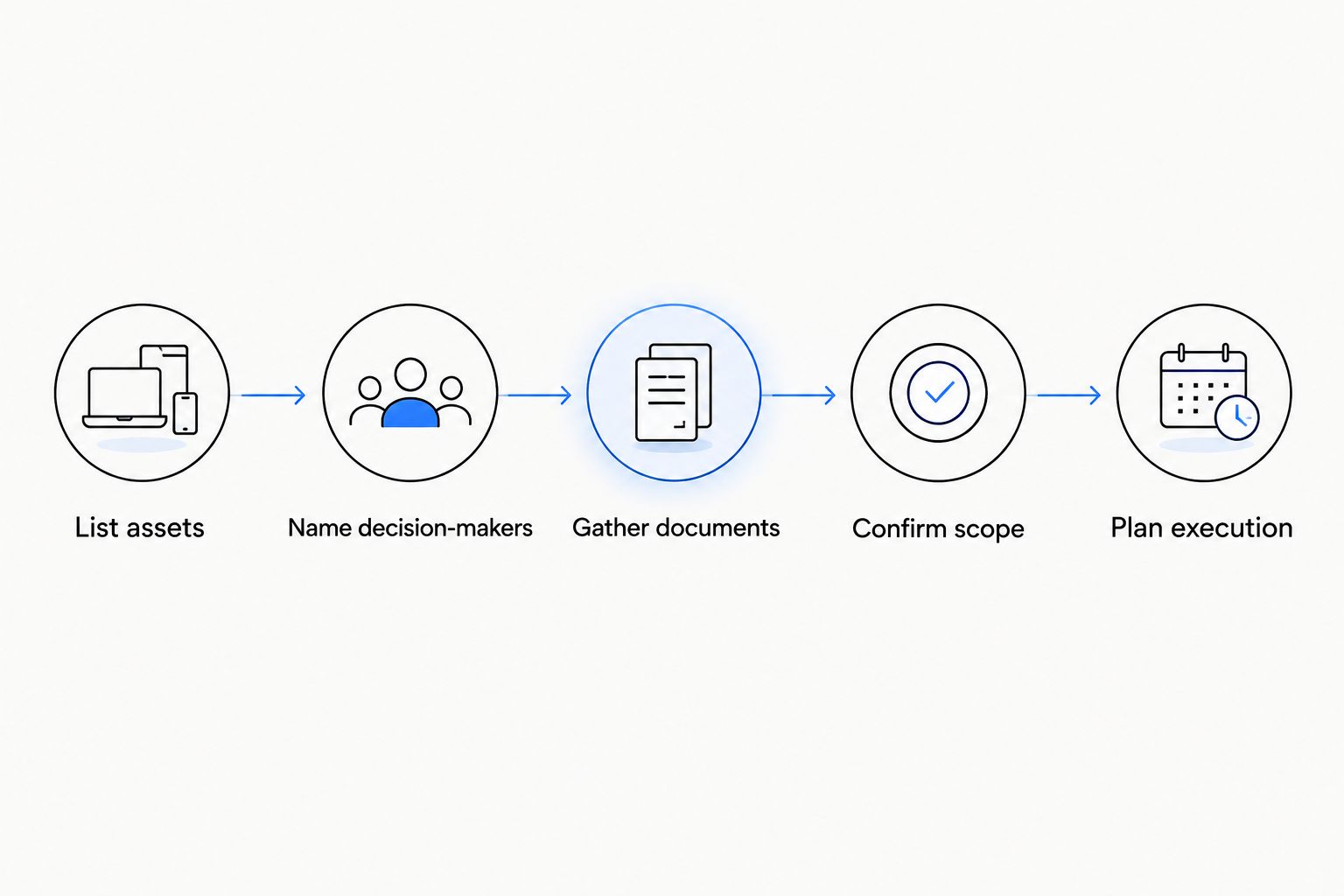
Before you book: prepare the handoff
Use this sequence to make your 2026 appointment specific. It gives the provider enough context to identify the requested work without asking you to disclose every sensitive record during an initial inquiry.
- List assets: Identify property, accounts, insurance, and existing beneficiary designations. Separate jointly owned assets from individually owned assets.
- Name decision-makers: Identify proposed agents, trustees, and personal representatives, including replacements if your first choice cannot serve.
- Gather documents: Collect existing wills, trusts, powers of attorney, and relevant ownership records.
- Confirm scope: Ask what the provider prepares, advises on, notarizes, or leaves for you to complete.
- Plan execution: Confirm signing instructions, identification, witnesses, and delivery or recording responsibilities.
The handoff is complete when both sides understand the task. A document list without instructions is not the same as a settled plan, and a signed plan without follow-up is not proof that every asset arrangement matches it.
Signing rules are not interchangeable
Nevada's standard witnessed-will requirements under NRS 133.040 generally call for 2 competent witnesses. A notary stamp alone does not replace the witness requirement. Different rules apply to other recognized will formats, so follow the requirements for the document being executed.
Nevada generally permits a person 18 years of age or older and of sound mind to make a will under NRS 133.020. Age alone is not the only requirement. Concerns about a signer's understanding belong in the planning discussion before execution.
Separate 2 authority areas in your checklist: financial decisions and healthcare decisions. That is an organizational recommendation, not a claim that every person needs an identical document package. Confirm the document appropriate to each role.
Ask about remote online notarization separately. The service concerns a notarial act; it does not turn every document into an electronic document or eliminate other execution requirements.
Which estate planning service should you choose?
Choose document preparation if your decisions are settled. Choose an attorney if the decisions themselves need legal review. That is the default decision rule for Las Vegas veterans in 2026.
Use the VA-accredited attorney category when benefits questions affect the plan. Use standalone mobile notarization when the documents are already prepared and the remaining task is an eligible notarial act.
Before authorizing work, ask one direct question: what will still be my responsibility after this service is complete? The answer should identify outstanding signatures, beneficiary changes, asset transfers, and institutional submissions relevant to your engagement.
FAQ
What's the best estate planning service for a veteran in Las Vegas?
The best service depends on whether you need document preparation, legal advice, benefits coordination, or notarization. Signature on Demand fits preparation from settled instructions; a Nevada estate planning attorney fits decisions requiring legal advice.
Can a document preparation service tell me whether I need a trust?
A document preparation service cannot replace an attorney's legal advice about whether you need a trust. Use a Nevada estate planning attorney when you need your options evaluated before documents are prepared.
Do veterans need a VA-accredited attorney for every estate plan?
No, veteran status alone does not make VA-accredited representation necessary for every estate plan. Verify accreditation when you need VA claims assistance, and separately confirm estate planning experience when the same attorney will handle your plan.
Does notarizing my Nevada will replace witnesses?
No, notarization alone does not replace the witnesses required for a standard witnessed Nevada will. NRS 133.040 generally requires two competent witnesses; other recognized will formats have different requirements.
Can a mobile notary prepare my trust?
A notary commission alone does not authorize legal advice or establish document preparation qualifications. Confirm whether the provider separately offers Nevada-licensed document preparation or attorney services.
Does my financial power of attorney cover VA representation?
Do not assume a financial power of attorney establishes authority to represent you before VA. State-law financial authority and VA representation involve separate requirements, so confirm the process for the specific VA task.
What should I bring to an estate planning appointment in 2026?
Bring existing estate documents, an asset list, beneficiary information, and the names of proposed decision-makers. Ask the provider which identification and supporting records are needed for your particular appointment.
One last thing
An ordinary power of attorney ends at the principal's death; it is not authority to administer the estate afterward. A personal representative or trustee has a different role. Explain that distinction to the people you name so they know when their authority applies.
Keep a document-location note with your plan. Tell the appropriate people where signed originals are stored and which institution or professional they should contact when action is needed. A completed document cannot help someone who does not know it exists.


