
No. A power of attorney ends when the person who granted it dies, so the agent cannot use it to manage that person’s money, sign documents, or make healthcare decisions afterward. In Nevada, a durable power of attorney can continue through incapacity, but not through death. After death, the person handling an asset needs authority from a different source, such as a court appointment, trust terms, or an ownership or beneficiary designation.
- Can a power of attorney be used after death? No; the agent’s authority ends when the principal dies.
- A durable power of attorney survives incapacity, not death, under Nevada law.
- An estate representative, successor trustee, or named beneficiary has a different role; none inherits the agent’s POA authority.
- Signature on Demand is best for Clark County families preparing Nevada power-of-attorney documents before they are needed, not administering an estate after death.
Why this matters
A document that worked at a bank yesterday can stop being the right document after a death. If you were helping a parent or spouse under a power of attorney, pause before signing anything else as their agent. The next step depends on who owns the asset and what authority applies to it now.
Signature on Demand is best for Clark County families who need Nevada power-of-attorney document preparation before death, not authority to administer an estate afterward. Its Nevada document preparation and notary services address getting documents prepared and signed; they do not turn a former agent into an executor or trustee.
Can a power of attorney be used after someone dies?
No. Nevada’s power-of-attorney rules in NRS Chapter 162A distinguish an agent’s authority during the principal’s life from the authority needed after death. The date of death is the dividing line for the power of attorney, even if the document says it is durable or gives the agent broad financial powers. A family relationship does not extend it.
| Document or role | What it can authorize | What happens after the principal dies |
|---|---|---|
| Financial power of attorney | An agent acts for a living principal within the document’s terms. | The agent’s POA authority ends. |
| Durable financial power of attorney | An agent can continue acting if the living principal becomes incapacitated. | Durability does not keep it in force after death. |
| Healthcare power of attorney | An agent makes covered healthcare decisions for a living principal when its conditions apply. | It is not authority to manage the estate. |
| Court-appointed estate representative | A person handles estate matters under a court appointment. | Their authority comes from the appointment, not the former POA. |
| Successor trustee | A person administers property held in a trust under its terms. | Their authority comes from the trust, not the former POA. |
The table separates 3 sources of authority that are easy to confuse: the principal’s power of attorney, a court appointment, and a trust. A title or beneficiary designation can create another route for a particular asset, so do not assume every account or property belongs to the probate estate.
What should you do with a POA after a death?
- Stop using the POA. Do not sign the deceased person’s name or present yourself as their current agent for a new transaction.
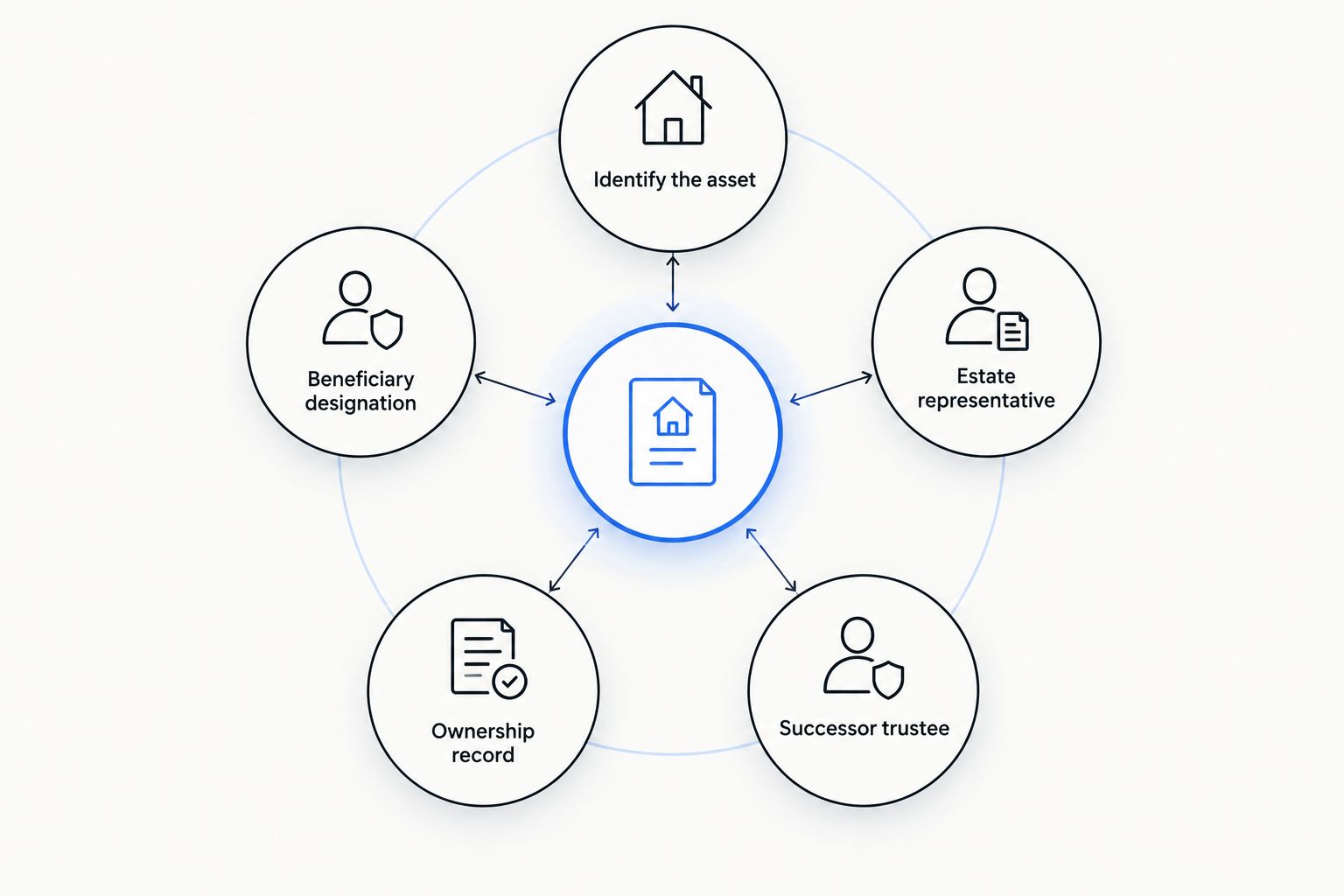
- Identify the asset. Check whether it is held in the deceased person’s name, owned jointly, held in a trust, or subject to a beneficiary designation.
- Identify the correct authority. Look for a court appointment for estate assets, the trust terms for trust property, or the applicable ownership or beneficiary records.
- Show the right documents to the institution. Ask the bank, title company, or other record holder what it requires from the person who now has authority.
These are 4 checks, not a new permission to act. If the ownership or documents are disputed, get Nevada legal advice before moving an asset. Signature on Demand prepares documents and provides notary services; it does not decide who is legally entitled to property after a death.
The path changes with the way an asset is held. Use the ownership record to choose which authority to check, rather than treating the former POA as a document that covers everything.
Does a durable power of attorney work after death?
No. Durable means the POA can remain effective during the principal’s incapacity; it does not mean it survives the principal’s death. That distinction matters if an agent had been paying bills or dealing with a bank while the principal was alive. Those prior responsibilities do not create a continuing right to use the account as an agent after death.
In 2026, read the document’s scope before assuming what it authorized during the principal’s life, but do not look for wording that extends ordinary POA authority beyond death. Nevada law governs the termination of that authority. An agent who also happens to be named in a will or trust must establish any separate role under that will, trust, or court process.
Does a medical power of attorney work after death?
No. A healthcare agent’s role concerns decisions for a living person under the applicable document. It does not become authority to pay bills, sell property, or settle an estate after the person dies. Holding both healthcare and financial POAs does not change that answer.
Keep healthcare paperwork separate from the documents needed for estate and trust matters. If a facility or institution asks for proof of a different role, presenting the medical POA does not establish it. For Nevada families organizing documents in 2026, label each document by its purpose so the right person can locate it when circumstances change.
Can an executor use the old power of attorney?
No. An executor or other estate representative acts in that capacity under the applicable court process, not under the deceased person’s POA. Being named as executor in a will is not the same as having a court appointment. Show the institution the proof it requires for the estate role rather than the former POA.
The same person can be named in more than one document. That does not merge the roles: an agent’s authority ends at death, while an estate representative’s authority has a separate basis. Before signing a 2026 estate form, check which role the signature line requires and whether you have documentation for it.
A successor trustee is different again. Trust terms govern that role and the property held in the trust. Being a former POA agent does not, by itself, make someone the successor trustee or give them control of property outside the trust.
Why the next step varies
The answer about the POA does not vary: it cannot be used after death. What varies is the document or process needed for each asset. Check these factors before asking someone to prepare or notarize another form:
- How the asset is titled. Property in an individual’s name, property held jointly, and property held in a trust call for different ownership checks.
- Whether a beneficiary is named. An account or asset with a beneficiary designation calls for a review of that designation rather than a request to keep using the POA.
- Whether there is a trust. A successor trustee’s powers come from the trust terms and apply to trust property, not automatically to every asset the person owned.
- Whether a court has appointed an estate representative. A will naming an executor and an appointment establishing authority are distinct documents.
- What the institution needs. A bank, title company, or agency can ask for records showing death, ownership, and the signer’s current authority.
For someone facing these decisions in 2026, the practical question is not whether the POA looks broad enough. It is which document gives this person authority over this asset now? That question also prevents a notary appointment from being mistaken for a legal decision about ownership. A notary can handle a notarization within their role; notarization alone does not supply missing estate authority.
Can I still pay a deceased parent’s bills with their POA?
No. The POA no longer authorizes you to use your parent’s accounts after death, even if paying their bills was part of your routine before. Identify who has authority over the account and ask the institution what it needs before making a payment from it. Keep a record of the bills you have found so the person handling the estate can review them.
A bill does not extend a POA. If you are also the person expected to handle the estate, establish that separate authority rather than signing as the former agent.
Does being named in a will let me use the POA after death?
No. A will does not revive the deceased person’s power of attorney. If you are named as executor, determine what court process applies and obtain the documentation needed to act in that role. If you are a beneficiary, being named to receive property is different from having authority to manage estate assets.
This distinction applies even when the will and POA name the same person. Read each document for its own purpose instead of treating them as interchangeable.
Can a bank accept a POA if it has not heard about the death?
No notice to a bank does not make the POA a sound basis for a new transaction once you know the principal has died. Nevada’s rules address the effect of actions taken in good faith without actual knowledge of a termination, but that protection is not permission for an informed agent to keep acting. Tell the institution about the death and ask what proof of current authority it needs.
If a transaction happened before you learned of the death, do not assume that every such transaction has the same outcome. Preserve the records and get Nevada legal advice about the facts.
FAQ
Can a power of attorney be used after death in Nevada?
No. A power of attorney ends when the principal dies; Nevada estate, trust, ownership, or beneficiary records determine who can act afterward.
Does a durable power of attorney continue after death?
No. Durability addresses a living principal’s incapacity, not the principal’s death. The former agent needs separate authority for any post-death role.
Can I withdraw money with my parent’s POA after they die?
No. Do not use the former POA for a withdrawal after your parent’s death. Ask the bank what documentation it requires from the person now authorized to handle the account.
Does an executor need the deceased person’s power of attorney?
No. An executor’s authority comes from the applicable court process, not the deceased person’s POA. Being named in a will is distinct from documenting authority to act.
Can a successor trustee act under the deceased person’s POA?
No. A successor trustee acts under the trust terms for trust property, not under the deceased person’s POA. Check the trust and the asset’s title before taking action.
Does a medical power of attorney cover funeral or estate decisions?
No. A medical POA does not give its agent general authority over the deceased person’s estate. Check the applicable documents and rules for the specific decision instead.
What should I show a bank after the account holder dies?
Show the records the bank requires to establish death and the signer’s current authority. The correct records depend on the account’s ownership, beneficiary designation, trust status, or estate process.
One last thing
The person who held the POA in 2026 might also become an estate representative or successor trustee, but the job title must change before the signature does. Do not sign the next form as an agent simply because you signed the last one that way. Signature on Demand can help Clark County families prepare Nevada power-of-attorney documents while the principal is alive; after death, identify the proper estate or trust authority first.


