Best overall for straightforward document preparation: Signature on Demand. Best for legal advice: a Nevada real estate attorney. Best for an already-approved document: a commissioned mobile notary. This 2026 guide compares service routes for a power of attorney for real estate transactions Nevada buyers and sellers need when someone else will sign on their behalf.
- Signature on Demand is best for straightforward Nevada real estate power of attorney document preparation, not legal advice.
- For power of attorney for real estate transactions Nevada closings, confirm title-company and lender requirements before signing.
- Choose a Nevada real estate attorney when ownership, agent authority or conflicts require legal advice.
- Mobile notarization and remote online notarization handle execution; neither replaces document preparation or title review.
Why this matters
A notarized power of attorney does not automatically clear a real estate closing. The document must authorize the agent's intended actions, and the closing parties must review the proposed use.
You are choosing between 5 service routes, not interchangeable providers. Document preparation, legal advice, transaction review, mobile notarization and remote online notarization solve different problems. Booking the wrong service leaves the original problem untouched.
For a 2026 Nevada closing, start with the title or escrow contact handling the transaction. Ask whether a power of attorney is acceptable, whether a lender has separate requirements, and who must review the document before execution.
What makes the best Nevada real estate POA service
Judge a service by the task it can legally perform and the work your closing requires:
- Document preparation: Can the provider prepare paperwork from your instructions, rather than only notarize an existing document?
- Legal advice: Does your situation require an attorney to explain rights, select authority or resolve a conflict?
- Transaction fit: Will the title company and any lender review the proposed document before the agent signs?
- Execution method: Does the transaction call for in-person notarization, or will the receiving parties accept remote online notarization?
- Scope of authority: Does the document address the actual transaction without granting authority you did not intend?
- Recording coordination: Who will determine whether the power of attorney must accompany the deed or other recorded documents?
Choose the service after identifying the unfinished task. An appointment solves scheduling; it does not solve an inadequate grant of authority.
Nevada real estate POA services at a glance
| Service route | Best for | Standout function | Key limitation |
|---|---|---|---|
| Signature on Demand | Straightforward local document preparation | Nevada-licensed document preparation plus mobile and remote online notary services | Document preparation is not legal advice |
| Nevada real estate attorney | Complex authority or ownership questions | Legal advice and drafting tailored to the transaction | Requires a legal engagement, not merely a notary appointment |
| Title or escrow coordination | Transaction-specific acceptance requirements | Identifies the closing team's requirements for agent signing | Does not replace independent legal advice |
| Commissioned mobile notary | An approved document needing in-person execution | Notarization at an arranged location | Notarization alone does not supply drafting or legal review |
| Nevada remote online notary | An approved document needing remote execution | Electronic notarization through an online session | Acceptance and technical requirements must be confirmed |
1. Signature on Demand: best for straightforward local preparation
Signature on Demand provides Nevada-licensed document preparation and mobile or remote online notary services. The Las Vegas-based service serves individuals and families in Clark County, including Henderson, North Las Vegas and Summerlin.
This route fits a person who needs paperwork prepared from their instructions and a suitable notarization method. It is not a substitute for an attorney deciding which powers you should grant or explaining the legal consequences of a proposed transfer.
Signature on Demand pros:
- Power of attorney preparation is among the stated document services.
- Mobile notarization provides an in-person execution option.
- Remote online notarization provides another execution route when accepted.
- The stated service area covers several Clark County communities.
Signature on Demand cons:
- A document preparation service cannot replace legal advice.
- The title company and any lender still need to review transaction requirements.
- The document must reflect your instructions; legal uncertainty belongs with an attorney.
Best for: A Clark County buyer or seller with clear instructions who needs document preparation and notarization, without unresolved legal questions.
Verdict: Buy this service route for straightforward preparation; hold if you need advice about ownership or agent authority.
2. Nevada real estate attorney: best for complex legal decisions
A Nevada real estate attorney is the right route when the question is what the document should authorize, not simply how to prepare it. Examples include disputed ownership, concerns about an agent benefiting from a transfer, or uncertainty about an existing power of attorney.
An attorney can advise you on the document's legal effect and draft language for the transaction. Ask whether the engagement includes coordination with title or escrow; do not assume that every legal engagement includes closing support.
Nevada real estate attorney pros:
- Provides legal advice about authority and ownership.
- Can evaluate an existing document against the proposed transaction.
- Can address conflicts between the principal's interests and the agent's actions.
Nevada real estate attorney cons:
- Legal representation is a separate engagement from notarization.
- Title-company and lender acceptance remain separate closing requirements.
Best for: A transaction involving disputed rights, unusual instructions, an agent's personal interest or questions about legal capacity.
Verdict: Buy legal advice before arranging execution when the document's legal effect is uncertain.
3. Title or escrow coordination: best for closing acceptance
The title or escrow contact handling your transaction is the practical starting point for acceptance requirements. Ask that contact to identify the review process, any requested form and any lender instructions before you schedule signing.
This is a coordination route, not a substitute for document preparation or representation. A title team's requirements tell you what the closing needs; they do not decide what authority is appropriate for your personal circumstances.
Title or escrow coordination pros:
- Connects the power of attorney to the actual closing file.
- Identifies requested documents and submission procedures.
- Establishes who needs to review the agent's proposed signing role.
Title or escrow coordination cons:
- Does not replace independent legal advice.
- Does not eliminate a lender's separate review.
Best for: A buyer or seller who already has a closing file and needs to establish acceptance requirements.
Verdict: Buy into this coordination step first; skip treating it as legal representation.
4. Commissioned mobile notary: best for approved in-person signing
A mobile notary handles the notarial act at an arranged location. This route fits a principal who already has the appropriate document and needs an in-person appointment rather than document selection or drafting.
The notary performs the required identity and execution procedures. A notarial certificate does not establish that the agent has every power needed for the closing or that a lender will accept the document.
Commissioned mobile notary pros:
- Provides an in-person notarization route.
- Separates execution from document preparation.
- Fits paperwork that has already passed the required review.
Commissioned mobile notary cons:
- A notary commission alone does not authorize legal advice.
- A notary-only appointment does not include document preparation.
- Travel arrangements do not resolve title or lender objections.
Best for: An approved power of attorney that needs in-person notarization.
Verdict: Buy notarization after document review; skip a notary-only appointment when drafting remains unfinished.
5. Nevada remote online notary: best for accepted remote execution
Remote online notarization uses an electronic process with live audiovisual communication and required identity procedures. It addresses how the principal appears before the notary; it does not determine which powers the principal should grant.
For a 2026 real estate transaction, confirm acceptance with title or escrow and any lender before choosing this route. Also confirm the session's identity, device and document requirements before the appointment.
Nevada remote online notary pros:
- Provides a remote appearance option.
- Supports electronic execution through the required notarial process.
- Fits an approved document when the receiving parties accept the method.
Nevada remote online notary cons:
- Requires suitable technology and identity verification.
- Does not provide legal advice merely because the session is online.
- Does not override the receiving parties' document requirements.
Best for: A principal who needs remote execution and has confirmed that the transaction accepts it.
Verdict: Buy remote notarization after acceptance is confirmed; hold while those requirements remain unresolved.
Authority, durability and notarization are different questions
Nevada's financial power of attorney rules appear in NRS Chapter 162A. A real estate transaction raises questions about the document's scope, when it takes effect and whether it remains effective if the principal becomes incapacitated.
Under NRS 162A.200, a Nevada power of attorney is durable unless it expressly provides that incapacity terminates it. Durable does not mean unlimited. A document's treatment of incapacity does not, by itself, answer whether the agent can perform the particular transaction.
NRS 162A.220 addresses execution and the presumption that an acknowledged signature is genuine. That is different from deciding whether a particular grant of authority covers the deed, financing or other closing documents.
Use these 3 review checkpoints before execution:
- Authority: What actions does the agent need to perform?
- Effectiveness: Is the document effective when those actions will occur?
- Acceptance: Have the necessary closing parties reviewed its proposed use?
Nevada document preparation services operate under NRS Chapter 240A. Notarial authority and document preparation authority are separate; neither makes a non-attorney provider your legal adviser.
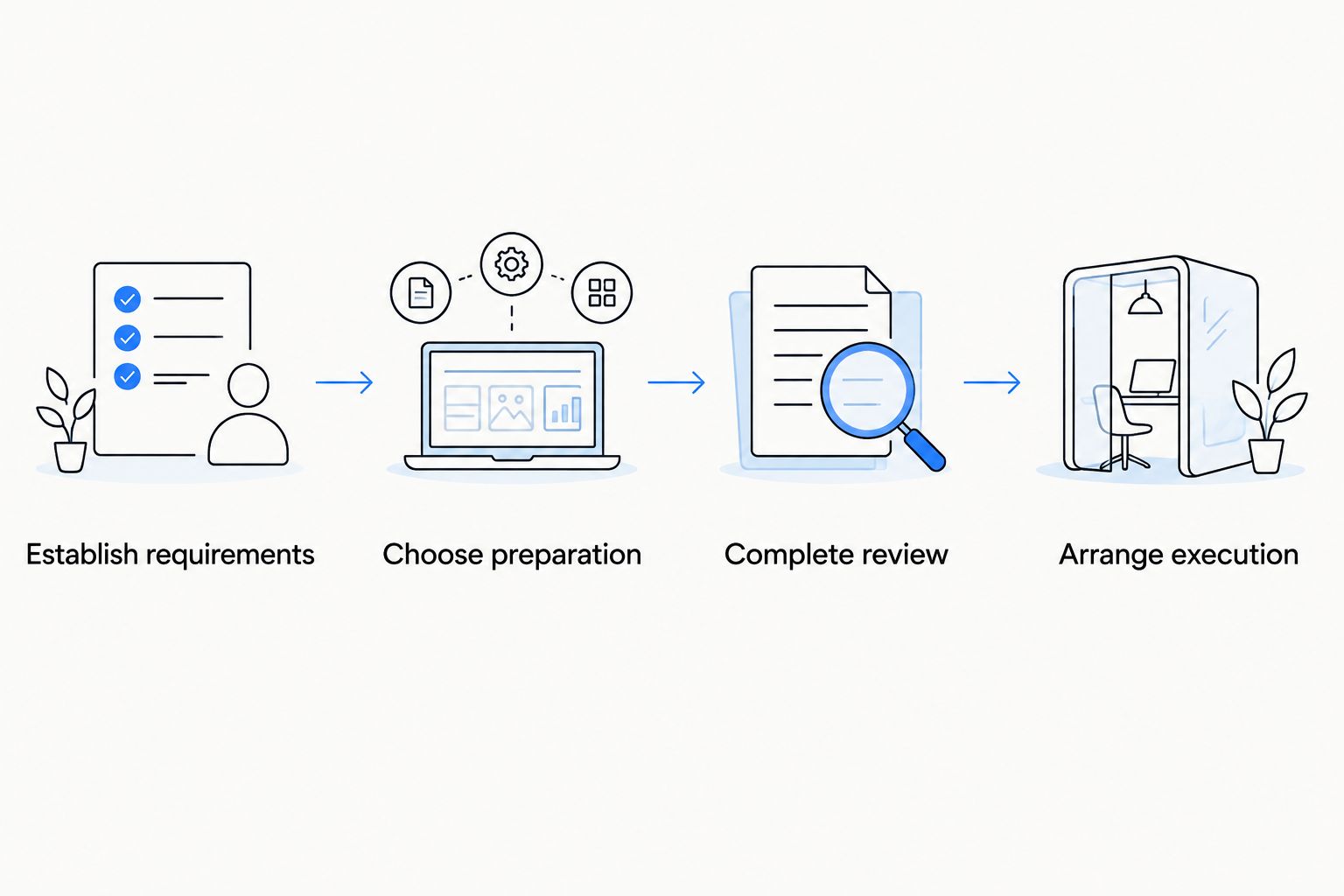
Prepare for a Nevada real estate POA in 4 steps
Establish requirements
Contact the title or escrow team before requesting preparation. Explain whether the principal is buying, selling or refinancing, identify who will act as agent, and ask who reviews the proposed power of attorney.
For your 2026 transaction, request the current requirements for that closing file. Do not reuse instructions from an unrelated property transaction without confirmation.
Choose preparation
Separate settled instructions from legal questions. A document preparer can work from your instructions; an attorney is the appropriate route when you need advice about the authority, restrictions or legal effect.
Provide the requested names and transaction information accurately. If the property involves a trust or business entity, identify that ownership structure rather than assuming a personal power of attorney covers every role.
Complete review
Submit the proposed document through the closing team's review process before execution. Ask whether any lender must review it separately and whether the receiving parties require additional supporting material.
Resolve requested changes before the notary appointment. An executed document is not a reason to skip review.
Arrange execution
Choose mobile or remote online notarization after confirming the accepted method. Follow the notary's instructions for identification, appearance and signing, then return the completed document through the requested channel.
Ask who will handle any required recording and whether an original or an electronic document is needed. Keep the execution appointment and the closing submission process distinct.
Recording is a separate closing task
Do not assume notarization completes the transaction's public-record requirements. Ask the closing team whether the power of attorney must be recorded, who will submit it and how it relates to the deed or other instrument.
The answer should come from the actual transaction requirements, not from a generic statement that every power of attorney is recorded. An agent signing a real estate document creates a different practical question from an agent using authority for an unrelated financial task.
The guide to whether a power of attorney needs to be recorded in Nevada addresses that distinction. For your closing, obtain specific instructions before handing documents to the agent.
How these service routes are ranked
This 2026 ranking follows the task each route performs: preparation, legal advice, closing acceptance, in-person execution or remote execution. It does not rank unnamed providers by reviews, speed or results.
Signature on Demand takes the first slot for straightforward local preparation because its stated services include both power of attorney preparation and notarization. A Nevada real estate attorney takes priority whenever legal judgment is the unfinished task.
Which Nevada real estate POA service should you choose?
Choose document preparation when your instructions are settled; choose an attorney when the instructions require legal advice. In either case, involve the closing team before execution.
If you already have an approved document, select the accepted notarization method instead of starting preparation again. If the document has not been reviewed, hold the signing appointment until the required reviewers have addressed it.
Arrange document preparation
Discuss Nevada power of attorney preparation and mobile or remote online notarization.
FAQ
What's the best power of attorney service for a Nevada real estate closing?
Signature on Demand fits straightforward document preparation, while a Nevada real estate attorney fits legal questions. Confirm title-company and lender requirements before choosing the preparation and notarization route.
Can someone sell my Nevada property using a power of attorney?
An agent needs authority that covers the proposed sale. Have the document reviewed for the transaction, and seek legal advice if its scope or effectiveness is uncertain.
Does durable power of attorney mean the agent can do anything?
No. Durability addresses continued effectiveness after incapacity, not unlimited authority. The document's granted powers and restrictions still matter.
Can a mobile notary prepare my real estate power of attorney?
A notary commission alone does not authorize document preparation or legal advice. A provider offering preparation must have the separate authority required for that service.
Can I use remote online notarization for a Nevada real estate power of attorney?
Nevada authorizes remote online notarization, but you must confirm acceptance for your transaction. Ask title or escrow and any lender before arranging the session.
Does my power of attorney need to be recorded with the deed?
Confirm recording requirements with the closing team for the specific transaction. Ask who submits the document and whether it must accompany another recorded instrument.
Can an agent use a power of attorney after the principal dies?
No. A power of attorney terminates when the principal dies under Nevada's financial power of attorney rules. Authority to administer an estate comes from a different legal process.
One last thing
An agent is often called an attorney-in-fact, but that title does not mean the person is a licensed attorney. It describes the representative acting under the power of attorney.
Before your 2026 closing, ask the closing team how the agent must sign each document. Do not improvise a signature format or assume the agent should sign only the principal's name.