
No. You do not need a lawyer to create a living trust in Nevada in 2026, but you do need a trust that reflects your wishes and a plan to transfer the intended assets into it. A licensed document preparer can help prepare documents; only a lawyer can give you legal advice about choices such as beneficiary rights, property ownership, and disputes.
- Do I need a lawyer for a living trust in Nevada? No; a lawyer is not required to create one.
- Signature on Demand is best for Nevada families seeking living trust document preparation, not legal advice.
- Choose a Nevada estate planning lawyer when ownership, beneficiaries, or family disputes require legal judgment.
- Signing a living trust does not, by itself, transfer every intended asset into it.
Do I need a lawyer to create a living trust in Nevada?
No lawyer is required solely because you want a Nevada living trust. The right kind of help depends on whether you already know what your documents should say or need advice about the consequences of your choices. In 2026, keep document preparation, legal advice, notarization, and asset transfers separate: completing one task does not complete the others.
| Approach | Best for | What it does | Main limitation |
|---|---|---|---|
| Prepare it yourself | Someone who can make and check each decision independently | Puts you in charge of the document and follow-up tasks | You must identify drafting and asset-transfer mistakes yourself |
| Signature on Demand document preparation | Nevada families who have decided what they want documented | Helps prepare estate planning documents; mobile and remote online notary services are also available | Document preparation is not legal advice |
| Nevada estate planning lawyer | Someone who needs legal guidance about property, beneficiaries, or a potential dispute | Advises on the legal effect of choices and drafts documents around those decisions | You still need to confirm that intended assets are addressed after signing |
Signature on Demand is best for Nevada families who need living trust document preparation, not legal advice. That distinction is the decision point. If you are asking what a provision means for a beneficiary, how competing property interests should be handled, or how to resolve a disagreement, speak with a Nevada lawyer before finalizing the trust.
Why this matters
A living trust is a set of instructions about property held under the trust. The document names the people who manage it and states how its terms work, but signing those instructions is not the same task as transferring an asset. If an asset remains outside the trust, the trust document alone does not place it inside.
That is why the question is not simply whether you can avoid a lawyer. It is whether you can make the necessary legal decisions yourself, prepare documents that express them, and complete the asset-by-asset follow-up. Document preparation solves the paperwork problem; it does not replace advice about which legal choices to make.
For a Las Vegas or Clark County family reviewing its estate documents in 2026, a useful starting point is an inventory: what do you own, how is it titled, who should manage it if you cannot, and who should receive it later? Those answers determine what help you need before anyone prepares a document.
How do you create a Nevada living trust without a lawyer?
Use this sequence to separate decisions from paperwork. It also gives you clear points at which to stop and ask a lawyer for advice rather than asking a document preparer or notary to make legal decisions for you.
- List the intended assets. Write down real estate, accounts, and other property you expect the trust to address. Check how each asset is owned now; a trust document does not change an ownership record just because the asset appears on your list.
- Choose the people named in the trust. Decide who will manage trust property and who should benefit from it. If you cannot explain how the trust should handle a particular person or asset, resolve that question before document preparation begins.
- Set out your instructions. Decide what should happen if you cannot manage your affairs and what should happen after your death. Do not leave an unresolved choice for a document preparer or notary to decide.
- Prepare and execute the document. Make sure the completed document reflects the decisions you made. Confirm the signing and any notarization requirements for the documents you are using rather than assuming one notarization covers an entire estate plan.
- Address each intended asset. Ask the institution or professional responsible for an account or property record what documentation it requires. Real estate and financial accounts have different processes; keep a record of what has actually been completed.
- Review related documents. A trust does not answer every question covered by a will or power of attorney. Check whether those documents still match your choices and whether they need separate preparation or legal review.
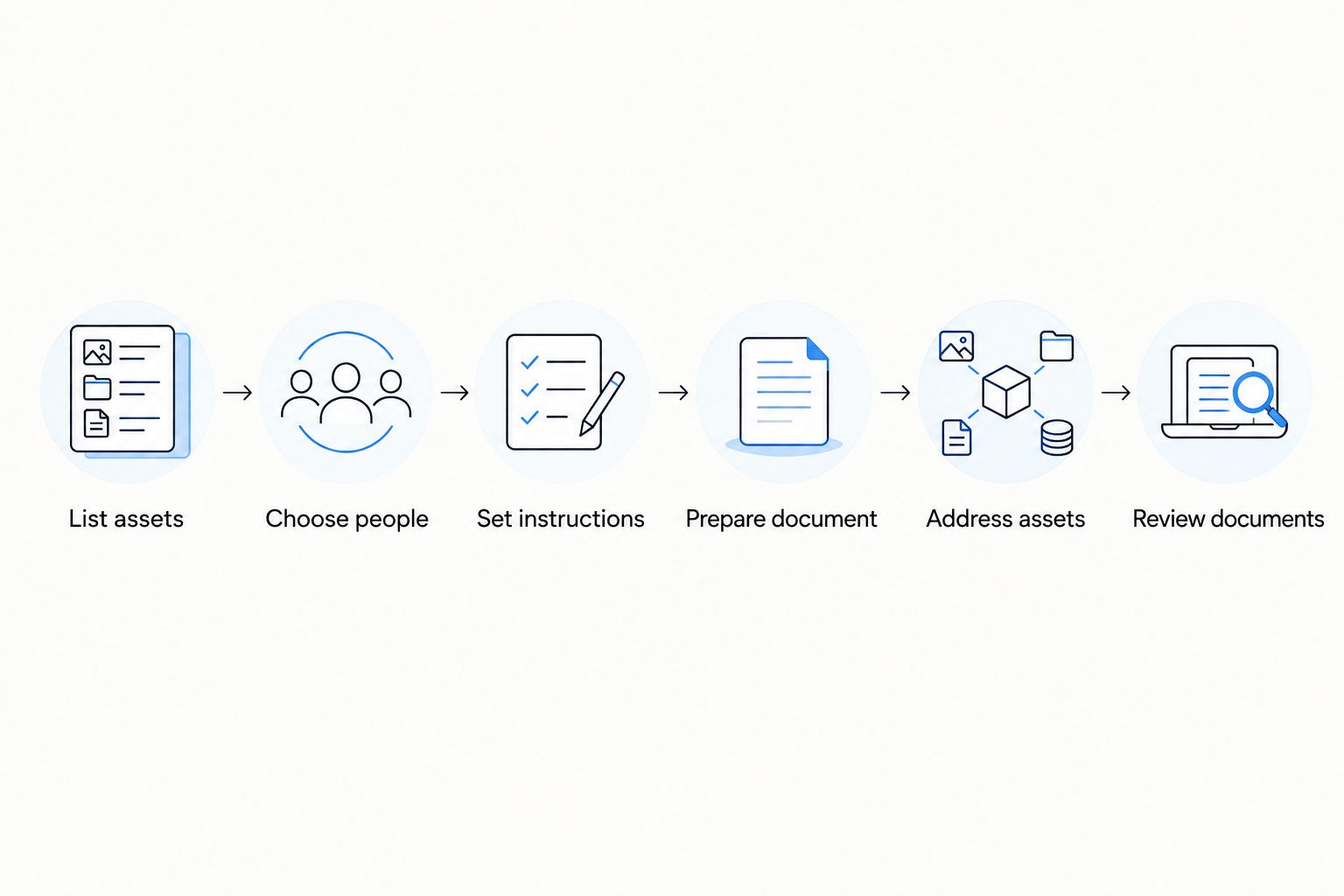
The list is a workflow, not a guarantee that a particular trust fits your circumstances. If a step requires you to determine someone’s legal rights, get advice from a Nevada estate planning lawyer. If your decisions are settled and you need documents prepared, a licensed document preparation service serves a different role.
When should you use a lawyer instead of document preparation?
Choose a Nevada estate planning lawyer when the unanswered question is what you should legally do, not how to put a settled decision into a document. That boundary is especially important when the people affected by a trust could reasonably disagree about ownership or distribution.
- Unclear property ownership: If you do not know who owns an asset or whether another person has a legal interest in it, resolve that before directing where it goes.
- Competing family interests: A blended family, disputed expectations, or conflicting instructions calls for advice about the effect of each choice.
- A business interest: A trust instruction and the documents governing a business must be considered together. Ask a lawyer how a proposed transfer affects that interest.
- Different documents giving different instructions: If a deed, beneficiary designation, will, or trust appears to point in another direction, get advice before assuming the trust controls.
- A disagreement already exists: Document preparation does not settle a dispute or represent you in it.
You can still organize your asset list and questions before meeting the lawyer. That preparation helps you identify the decisions that need advice; it does not require a document preparer to answer them. For a family with straightforward, settled instructions, Signature on Demand can help with Nevada estate planning document preparation without presenting that service as legal counsel.
Why does the amount of help you need vary?
The deciding factor is not the length of the trust. It is how much judgment remains unresolved and how many separate ownership records need attention. In 2026, use these factors to decide whether to start with document preparation or legal advice:
- Ownership: Property you own alone raises different questions from property owned with someone else. Confirm the current record before writing transfer instructions.
- Beneficiaries: If you need help deciding how to treat a child, spouse, or other beneficiary, ask a lawyer what the proposed terms do.
- Real estate: A trust document does not rewrite a deed. Determine what separate documentation the property transfer requires.
- Financial accounts: An account’s title and beneficiary designation require their own review. Do not assume that naming an account in the trust completes the institution’s process.
- Related documents: A will and powers of attorney address decisions a trust may not cover. Check that the instructions do not conflict.
- Possible objections: If you expect someone to contest a decision, legal advice is the appropriate starting point.
These factors also explain why two people who both want a living trust can need different services. One has made the decisions and needs help putting them into documents. The other needs a lawyer to determine how those decisions should work under Nevada law.
Can a document preparer help with a Nevada living trust?
Yes. A Nevada-licensed document preparation service can help prepare documents using the information and decisions you provide. Signature on Demand offers estate planning document preparation and mobile and remote online notary services to individuals and families in Clark County, including Las Vegas, Henderson, North Las Vegas, and Summerlin.
A document preparer does not become your lawyer by preparing a trust. Do not ask a preparer to decide who should receive property, interpret a disputed ownership interest, or recommend a legal strategy. Those are reasons to consult an attorney first. A notary has a separate function connected to notarization; a notarized signature does not establish that the trust says what you intended or that property was transferred into it.
Before requesting preparation in 2026, bring an accurate list of the people and assets involved and write down any decisions you have not made. If your list contains an unresolved legal question, resolve it with a lawyer before treating the document as ready to sign.
Does signing a living trust move a house into it?
No. Signing the trust does not, by itself, change the ownership shown on a Nevada real estate deed. If you intend the trust to hold a house, the property transfer is a separate task, with its own document and recording considerations.
That distinction matters even when the trust clearly identifies the home. Check the current deed, determine what transfer is appropriate, and confirm the completed ownership record. If the home has multiple owners or you are unsure about the effect of a transfer, obtain legal advice rather than relying on notarization to answer the ownership question.
Can a living trust replace a will or power of attorney?
No. A living trust, will, and power of attorney address different tasks; one document does not automatically perform every function of the others. Review them together so the people you name and the instructions you give are consistent.
For example, a trust addresses property under its terms, while a power of attorney concerns authority granted to someone to act for you. The right combination depends on the decisions you need documented. If you are unsure how the documents interact, that is a question for a Nevada estate planning lawyer, not a signing appointment.
FAQ
Do I need a lawyer for a living trust in Nevada in 2026?
No, a lawyer is not required solely to create a Nevada living trust in 2026. Consult one if you need legal advice about ownership, beneficiaries, or disputed instructions.
Can I prepare my own living trust in Nevada?
Yes, you can prepare your own Nevada living trust. You remain responsible for making the decisions, completing the document correctly, and addressing assets you intend the trust to hold.
Can a Nevada document preparer give me trust advice?
No, document preparation is not legal advice. Ask a Nevada lawyer to explain legal consequences or recommend how to handle a disputed or unclear choice.
Does notarizing a trust put my house in the trust?
No, notarizing a trust does not change the ownership record for a house. A real estate transfer requires separate attention to the appropriate property documents.
Should I choose a lawyer or a document preparer for my trust?
Choose a lawyer when you need legal judgment; choose document preparation when your decisions are settled and you need them documented. If you are unsure about someone’s rights, speak with the lawyer first.
Does a living trust replace my Nevada power of attorney?
No, a living trust does not automatically replace a power of attorney. Review both documents to determine whether they address the decisions and authority you intend.
One last thing
The easiest trust task to overlook is the one after signing: checking whether each intended asset has actually been addressed. Keep the trust document with a separate list of property, accounts, and the follow-up completed for each. In 2026, that record gives you a more useful answer than simply knowing you signed a trust.
Signature on Demand can help prepare Nevada estate planning documents, but no document preparation or notary appointment substitutes for legal advice when an ownership or beneficiary decision remains unresolved.


