
A Nevada small estate affidavit requires a minimum wait of 40 days after the person's death under NRS 146.080; that is the earliest eligibility point, not a guaranteed date for receiving assets. Any required notice period and the receiving institution's review also affect completion. For 2026 planning, separate the statutory waiting period from document preparation, notarization, and asset release.
- How long does a small estate affidavit take in Nevada? NRS 146.080 requires at least 40 days after death.
- Required notice to people with equal or superior inheritance rights must precede the affidavit by at least 14 days.
- A notarized affidavit does not guarantee immediate release of a bank account or other personal property.
- Signature on Demand provides document preparation and notarization; disputed inheritance rights require legal advice.
How long does a small estate affidavit take in Nevada?
The statutory minimum is 40 days after death, but the total completion time includes additional steps. Nevada Revised Statutes, NRS 146.080, governs collection of qualifying personal property by affidavit. Its requirements are the starting point for your 2026 timeline.
| Stage | Timing requirement | What it means for you |
|---|---|---|
| Waiting after death | At least 40 days | You cannot use the affidavit before this requirement is satisfied. |
| Required inheritance notice | At least 14 days after notice is served or mailed | Complete notice to people with equal or superior rights before making the affidavit. |
| Preparation and notarization | No single statutory completion estimate | Eligibility, supporting records, and a completed affidavit must come together. |
| Institution review and transfer | No universal release timeline stated here | Ask the institution holding the property about its submission and review process. |
For help understanding the paperwork stage, see the guide to small estate settlement document services in Nevada. Do not treat the date you can sign as the date money will reach you.
Why this matters
A family often needs access to funds while bills and estate responsibilities continue. The affidavit route removes the need for a personal representative to collect qualifying property through this particular procedure, but it does not remove the statutory safeguards.
Your practical question is therefore not just when the waiting period ends. It is whether the property qualifies, whether you have the right to collect it, and whether the recipient has everything needed to act on the affidavit. A finished form cannot correct an ineligible estate or an unresolved inheritance dispute.
Death waiting period: at least 40 days
NRS 146.080 requires at least 40 days after the decedent's death before collection through the affidavit procedure. The clock runs from the death, not from when you receive the death certificate, contact a preparer, or discover an account.
Use the waiting period to assemble records rather than leaving every task until it expires. Obtain the death certificate, identify the personal property, and determine who holds it. Keep the death date consistent across the affidavit and supporting documents.
Preparing information early does not authorize early collection. Do not sign a sworn statement saying the statutory period has elapsed when it has not. Ask the preparer or an attorney to confirm the timing before you execute the affidavit.
For a 2026 submission, use the current statutory requirements and the receiving institution's current instructions. An older form is not a substitute for checking whether its statements still match the law and your circumstances.
Required notice period: at least 14 days
NRS 146.080 also addresses written notice to people whose right to succeed to the property is equal or superior to yours. The notice must identify your claim and describe the property claimed, and at least 14 days must elapse after the notice is served or mailed before the affidavit is made.
The statute specifies personal service or certified mail for this notice. An informal conversation, text message, or family agreement is not a substitute for the specified notice procedure. Preserve documentation of how and when notice was given.
The notice period does not automatically add another 14 days after the death waiting period. Both requirements must be satisfied when you make the affidavit; the actual sequence depends on when proper notice occurs.
If you do not know who has equal or superior rights, resolve that question before sending notices or signing. A document preparer can assist with paperwork within the permitted scope, but an attorney should determine disputed inheritance rights.
Preparation and asset release: separate completion stages
There is no single reliable total turnaround that applies to every Nevada small estate affidavit. Preparing a form, notarizing your signature, submitting the packet, and receiving property are different events. Ask which event a quoted completion date actually describes.
A bank's acceptance process is not the same as a notary appointment. The institution must receive the affidavit and supporting materials, then act on the claim under the applicable requirements. A notarial certificate does not direct the bank to release funds immediately.
For your 2026 checklist, track each stage separately:
- Eligibility: Confirm that the estate and property meet NRS 146.080.
- Waiting periods: Verify the death waiting period and any required notice period.
- Completed packet: Assemble the affidavit and supporting records.
- Submission: Deliver the packet through the recipient's accepted process.
- Asset release: Confirm that the property has actually transferred.
Do not describe the estate as settled simply because the affidavit has been notarized. Collection of one asset does not establish that every estate obligation has been resolved.
What should you do during the waiting period?
The most useful work happens before signing. A clear inventory and an early conversation with the property holder help you avoid preparing an affidavit around incomplete information.
- Identify property. List the assets you are trying to collect and the institution or person holding each one. Separate personal property from real estate.
- Check eligibility. Review the statutory estate-value limits, your entitlement, and whether a personal representative's appointment is pending or has been granted. Do not assume a small account means the entire estate qualifies.
- Gather records. Obtain the death certificate and records identifying the property. Ask the recipient which documents and affidavit format it requires.
- Give notice. Identify anyone with equal or superior inheritance rights and complete the statutory notice procedure when required. Keep the notice records with the estate paperwork.
- Confirm timing. Verify that both applicable waiting requirements have elapsed. Recheck names, descriptions, and the statements you will swear are true.
- Submit documents. Execute the affidavit properly and deliver the completed packet. Retain a copy and ask how to follow up on acceptance and release.
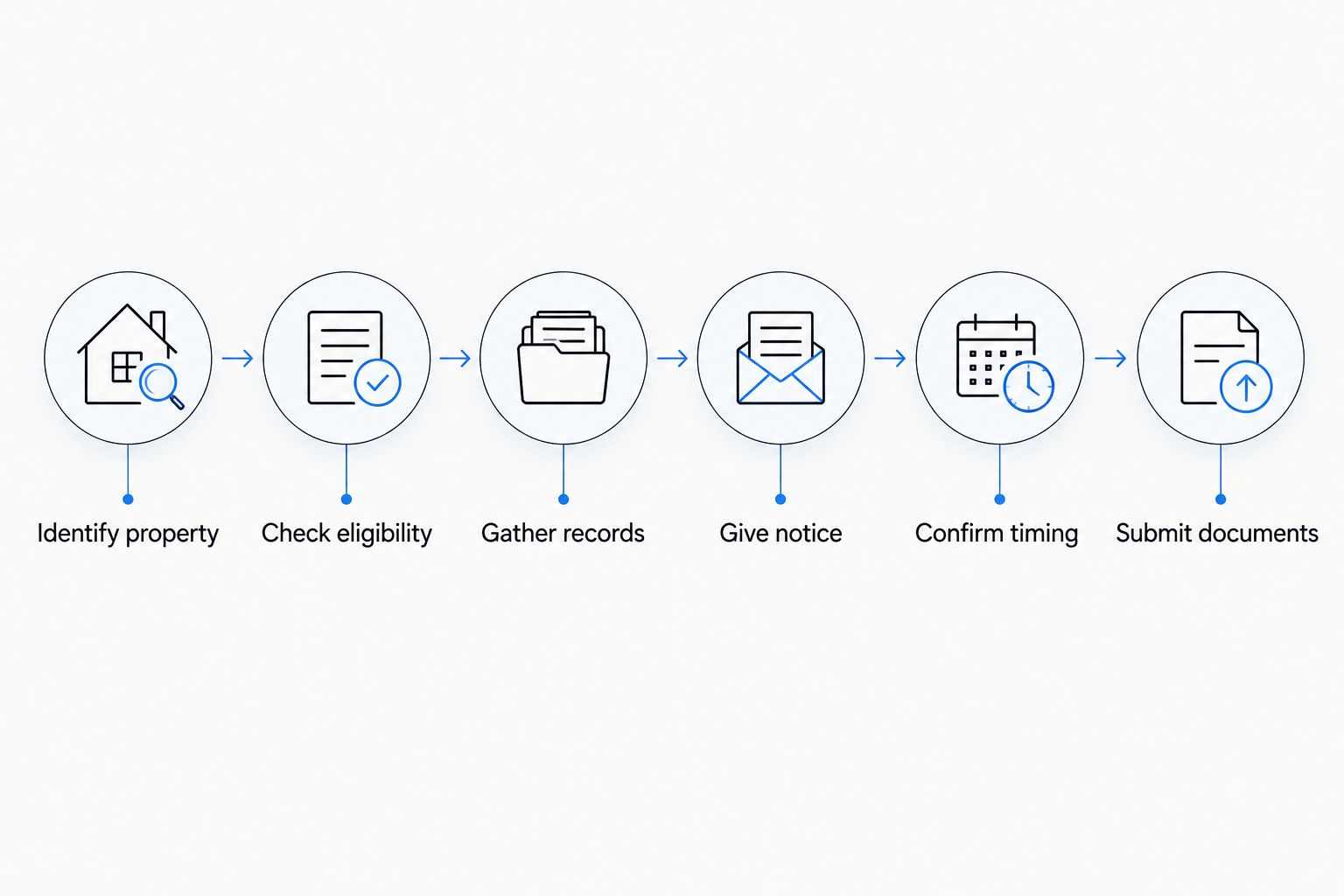
Keep a single working file for the affidavit, notices, supporting documents, and recipient instructions. If different family members gather records, reconcile the information before anyone signs a sworn statement.
Why small estate affidavit timing varies
The statutory waiting period is fixed; readiness to use the procedure is not. These factors determine which tasks remain before you can submit a complete claim:
- Property eligibility. NRS 146.080 concerns qualifying personal property, not a general method for transferring real estate. A house requires a different analysis.
- Estate value. The statutory limits apply to the relevant estate calculation, not merely the balance of the account you want to collect.
- Inheritance rights. You must establish your entitlement and address required notice to people with equal or superior rights.
- Personal representative proceedings. The affidavit includes statements concerning whether an appointment is pending or has been granted in any jurisdiction.
- Debts and expenses. The statute requires statements concerning payment or provision for debts, including funeral and burial expenses.
- Supporting documents. The recipient needs a usable affidavit packet; unresolved identity, ownership, or document issues must be corrected.
A faster appointment cannot cure a statutory eligibility problem. If the facts do not support the affidavit's required statements, stop and obtain legal advice instead of signing a form that does not fit.
Can I get the money as soon as 40 days have passed?
40 days is the minimum death waiting period, not a payment deadline. You still need to meet the remaining statutory requirements and present the affidavit to the holder of the property.
Ask the institution what constitutes a complete submission and how it communicates acceptance or requests for corrections. If you need funds for a particular obligation, do not promise a payment date based solely on the waiting period.
Do I have to wait another 14 days after the 40 days?
14 days is the required notice interval, not automatically an additional wait after the death waiting period. The applicable notice interval and the 40-day death interval must both have elapsed before you make the affidavit.
Keep evidence of the notice date. If notice started late, that requirement can become the remaining timing barrier even after the death waiting period has ended.
Does notarizing the affidavit finish the estate?
Notarizing the affidavit does not finish the estate or establish your legal entitlement to the property. Notarization addresses the notarial act; the affidavit's truth, statutory eligibility, and asset collection remain separate responsibilities.
You must still submit the packet and complete the collection process. Other assets, debts, or disputes require their own attention even when a particular institution accepts the affidavit.
Who should help with the paperwork?
Signature on Demand is best for Clark County families seeking document preparation and notarization, not legal advice. The business is a Nevada-licensed document preparation service based in Las Vegas and provides mobile and remote online notary services.
Choose assistance according to the task, not just the appointment date. Document preparation, notarization, and legal advice serve different purposes.
| Type of help | Best for | Benefit | Limit |
|---|---|---|---|
| Signature on Demand | Clark County families seeking document preparation and notarization | Provides the stated document preparation and notary services | Does not replace an attorney's legal advice or guarantee asset release |
| Notary public | Completing a required notarial act | Performs notarization | Notarization alone does not determine inheritance rights or estate eligibility |
| Nevada attorney | Disputed rights or uncertain legal eligibility | Can advise on legal rights and the appropriate estate procedure | Legal representation does not eliminate statutory waiting requirements |
Contact Signature on Demand to confirm the scope of assistance available for your particular affidavit. Bring the facts and recipient instructions, rather than asking a preparer to guess which legal route applies.
Ask about document preparation
Confirm the assistance available for your estate paperwork and notarization needs.
FAQ
How long does a small estate affidavit take in Nevada in 2026?
Nevada requires at least 40 days after death under NRS 146.080 before collection through the small estate affidavit procedure. Required notice, document completion, and the property holder's review also affect when you receive assets.
Does Nevada count the waiting period from the death certificate date?
The 40-day waiting period runs from the person's death, not the date the death certificate is issued. Use the documented death date when checking eligibility to execute the affidavit.
Can a mobile notary shorten the small estate waiting period?
A mobile notary cannot shorten Nevada's 40-day statutory waiting period. Notary services address execution of the document, not an exception to estate-law requirements.
Do other heirs need notice before I use a Nevada small estate affidavit?
NRS 146.080 requires notice to people whose right to succeed to the property is equal or superior to the affiant's. At least 14 days must elapse after the specified notice is served or mailed before the affidavit is made.
Do I file the small estate affidavit with a Nevada court?
The NRS 146.080 affidavit procedure generally involves presenting the affidavit to the person or institution holding qualifying personal property, rather than asking a court to appoint a personal representative. Follow the recipient's submission instructions and obtain legal advice if the estate requires another procedure.
Can I use a small estate affidavit to transfer a Nevada house?
NRS 146.080 is a procedure for qualifying personal property, not a general affidavit route for transferring a house. Obtain advice about the appropriate real-property or probate procedure.
Can Signature on Demand help with Nevada estate paperwork?
Signature on Demand provides Nevada document preparation and mobile or remote online notary services. Confirm the scope available for your affidavit; legal eligibility questions and inheritance disputes require legal advice.
One last thing
An old power of attorney is not a shortcut around the estate process. An agent's authority under a power of attorney ends when the principal dies. Access that was authorized during life does not authorize collecting estate assets afterward.
Before your 2026 submission, ask the property holder one specific question: what documents must accompany this affidavit for your claim to be complete? Record the answer, then compare it with the statutory requirements before signing.


